Modern Operating Systems - Andrew S. Tanenbaum [3rd Edition]

Publisher       Prentice Hall
Year             2007
ISBN:           0136006639
Pages:           1104 pages
Format:         PDF
Size:             180 MB

Description:
The widely anticipated revision of this worldwide best-seller incorporates the latest developments in operating systems technologies. The Third Edition includes up-to-date materials on relevant operating systems such as Linux, Windows, and embedded real-time and multimedia systems. Includes new and updated coverage of multimedia operating systems, multiprocessors, virtual machines, and antivirus software. Covers internal workings of Windows Vista (Ch. 11); unique even for current publications. Provides information on current research based Tanenbaum’s experiences as an operating systems researcher. A useful reference for programmers.

Table of Contents

1 INTRODUCTION1.1
2 PROCESSES AND THREADS
3 MEMORY MANAGEMENT
4 FILE SYSTEMS
5 INPUT/OUTPUT
6 DEADLOCKS
7 MULTIMEDIA OPERATING SYSTEMS
8 MULTIPLE PROCESSOR SYSTEMS
9 SECURITY
10 CASE STUDY 1: LINUX
11 CASE STUDY 2: WINDOWS VISTA
12 CASE STUDY 3: SYMBIAN OS
13 OPERATING SYSTEMS DESIGN
14 READING LIST AND BIBLIOGRAPHY

INDEX

DOWNLOAD EBook    HERE
DOWNLOAD Solution  HERE

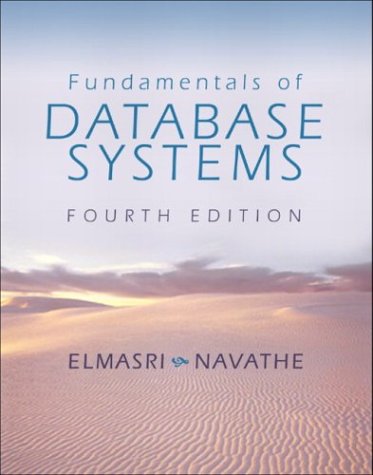
Fundamentals of Database Systems (4th Edition)

Authors: Elmasri , Navathe 
Pages:  1009
Publisher: Addison Wesley;
Edition : Forth
Date Released: (July 23, 2003) 
Languague: English
ISBN: 0321122267
Format: PDF 
Size: 38 MB


Description:

 Fundamentals of Database Systems has become the world-wide leading textbook because it combines clear explanations of theory and design, broad coverage of models and real systems, and excellent examples with up-to-date introductions and modern database technologies. This book has been revised and updated to reflect the latest trends in technological and application development. This fourth edition expands on many of the most popular database topics, including SQL, security, and data mining along with an introduction to UML modeling and an entirely new chapter on XML and Internet databases.

Table Of Contents:

I. INTRODUCTION AND CONCEPTUAL MODELING.
1. Databases and Database Users. 
2. Database System Concepts and Architecture. 
3. Data Modeling Using the Entity-Relationship Model. 
4. Enhanced Entity-Relationship and UML Modeling. 


II. RELATIONAL MODEL: CONCEPTS, CONSTRAINTS, LANGUAGES, DESIGN, AND PROGRAMMING.
 5. The Relational Data Model and Relational Database Constraints. 
 6. Relational Algebra and Relational Calculus. 
7. Relational Database Design by ER- and EER-to-Relational Mapping. 
8. SQL99-Schema Definition, Constraints, and Queries. 
9. More SQL-Assertions, Views, and Programming Techniques. 


III. DATABASE DESIGN THEORY AND METHODOLOGY.
10. Functional Dependencies and Normalization for Relational Databases. 
11. Relational Database Design Algorithms and Further Dependencies. 
12. Practical Database Design Methodology Using UML. 

IV. DATA STORAGE, INDEXING, QUERY PROCESSING, AND PHYSICAL DESIGN.
13. Disk Organization, Basic File Structures, and Hashing. 
14. Indexing Structures for Files. 
15. Algorithms for Query Processing and Optimization. 
16. Physical Database Design and Tuning. 

V. TRANSACTION PROCESSING CONCEPTS.
17. Introduction to Transaction Processing Concepts and Theory. 
18. Concurrency Control Techniques. 
19. Database Recovery Techniques. 

VI. OBJECT AND OBJECT-RELATIONAL DATABASES.
20. Object Database Concepts. 
21. The ODMG Standard for Object Databases. 
22. Object-Relational Systems and SQL3. 

VII. FURTHER TOPICS.
23. Database Security, Authorization, and Encryption. 
24. Enhanced Data Models for Advanced Applications. 
25. Distributed Databases and Client-Server Architectures.

VIII. EMERGING TECHNOLOGIES.
26. Internet Databases and XML.  
27. Data Warehousing and Data Mining Concepts. 
28. Emerging Database Technologies and Applications. 
Appendix A. Alternative Diagrammatic Notations for ER models. 
Appendix B. Database Design and Application Implementation Case Study. 
(New appendix on the Web including a detailed database design case study). 
Appendix C. Parameters of Disks (old Appendix B). 
Appendix D. The QBE Language (old section 9.5). 
Appendix E. Hierarchical Data Model (old Appendix C dropped - moved to Web). 
Appendix F. Network Data Model (old Appendix D dropped - moved to Web). 
Bibliographic References. 
Index. 


DOWNLOAD BOOK HERE

Blog Widget by LinkWithin